I help therapists understand who they are before asking them to market themselves.

My work brings together marketing, communication, website strategy and counselling training. I help newly qualified and early-career therapists identify what is distinctive about their work, express it clearly and build a private practice that feels genuinely their own.

01

Clarity first. Website second.

I do not begin by trying to make a therapy practice sound bigger, louder or more polished than it is.

I begin by helping the therapist understand what is already there: the values that guide their work, the strengths they bring into the room, the people they naturally connect with and the kind of professional presence that feels honest rather than performed.

Once those foundations are clearer, positioning, messaging, visual identity and website design become easier to approach. Each decision can be traced back to something real about the practice.

The website comes last because it is an expression of the work before it, not a substitute for it.

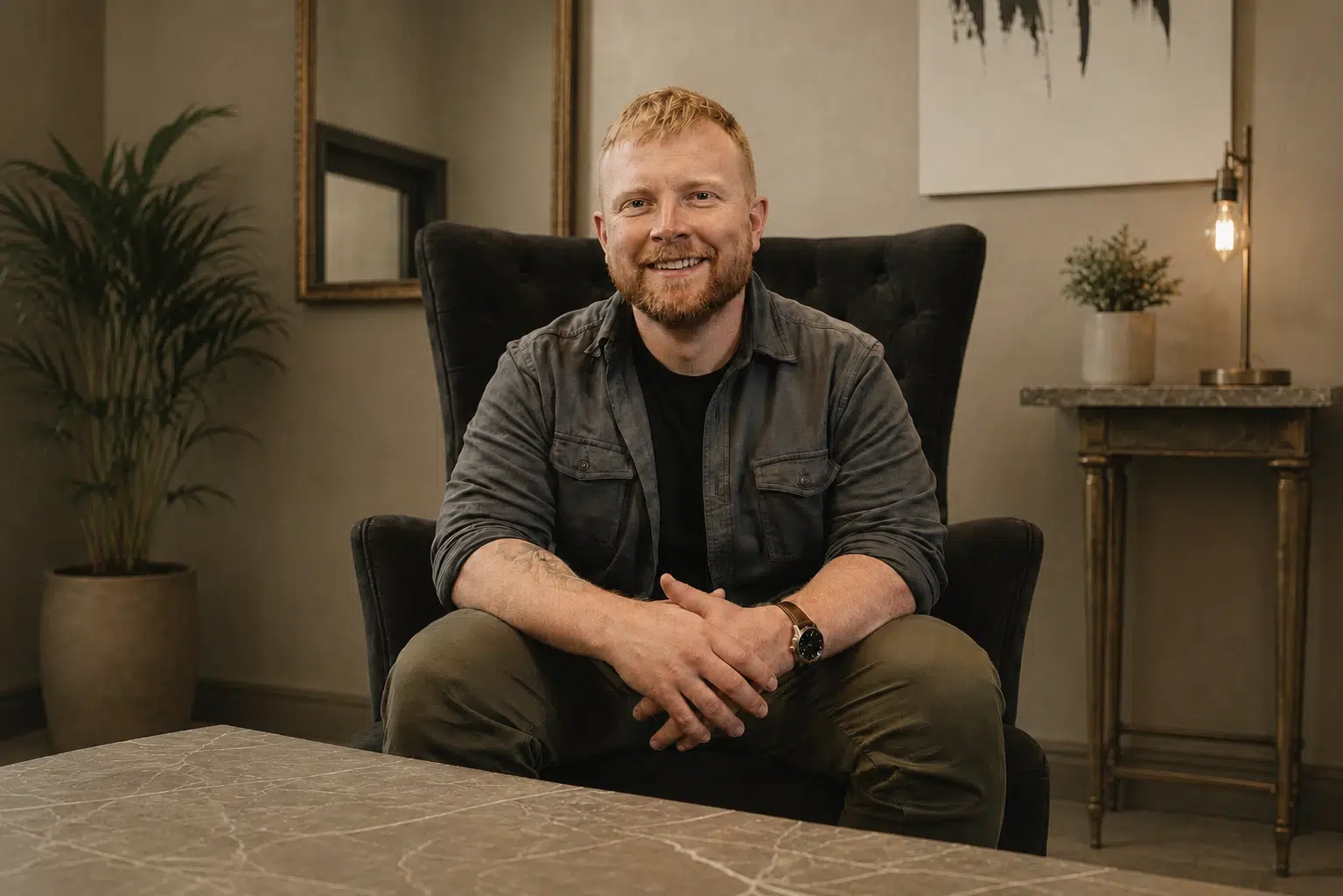
Portrait of Alexander Watson

I do not turn therapists into brands. I help uncover what is already distinctive, then shape it into something clear enough for the right people to recognise.

02

Why I work with therapists.

My background is in marketing, websites and communication. I have spent years thinking about how information is structured, how people make decisions and how a digital experience can make something feel easier or harder to understand.

I am also completing a Level 4 Diploma in Therapeutic Counselling at Stockport College and beginning my work with counselling clients.

That combination has changed how I think about websites. A therapy website is not simply a promotional tool. It may be part of someone’s first movement towards support, often while they feel uncertain, exposed or unsure whether they will be understood.

The wording, structure and emotional tone therefore matter. The site needs to help someone recognise themselves, get a grounded sense of the therapist and understand what will happen if they make contact.

Practice Clarity notes and planning materials for a therapist's professional identity

03

The problem I kept noticing.

Therapist websites often look professional while revealing very little about the person or practice behind them.

01

Similar qualifications

Many therapists have comparable training, memberships and modalities, which makes credentials alone a weak way to communicate meaningful difference.

02

Similar language

Phrases such as “safe space,” “non-judgemental support” and “a journey towards change” are sincere, but repeated so often that they become difficult to attach to one particular therapist.

03

Similar imagery

Leaves, paths, pebbles and calm rooms may signal therapy, but they rarely explain the emotional character or professional identity of the individual practice.

04

Unclear professional identity

Newly qualified therapists may know how they want to work with clients while still struggling to explain who they are professionally outside the therapy room.

05

Pressure to choose a niche

Therapists are often told to specialise before they have had enough experience to recognise the people, themes and relationships that naturally suit them.

06

Design before understanding

When a website begins with templates, colours or page lists, the therapist is expected to make design decisions before the practice itself has been properly articulated.

04

I am developing the process through my own counselling practice first.

I did not want to create a framework for therapists without applying it rigorously to my own professional identity.

I have used the process to explore the therapist I am becoming, the values and experiences shaping my work, the clients I may be particularly suited to support and the way I want my counselling practice to feel before someone makes contact.

That work has informed my own positioning, messaging, Visual Identity Brief and counselling website. It is also helping me identify what needs to be clarified, documented and improved before offering the process more widely.

As the identity and website are completed, I will publish the full development as the first transparent case study of the method.

Practice Clarity Blueprint showing identity, audience, voice and website direction

05

How I work.

Thoughtful, collaborative and transparent. The aim is not to force an identity onto your practice, but to find the clearest expression of what is already becoming true.

01

Listening before recommending

I begin by understanding your practice, training, uncertainty and aspirations before deciding what would be useful.

02

Looking for patterns

I pay attention to recurring language, values, relationships and emotional themes that may reveal what is distinctive about the way you work.

03

A reason for every decision

Positioning, copy, imagery, typography, colour and page structure should all connect back to the strategic foundation.

04

Honest scope

I will recommend the simplest useful next step. A complete rebrand or website is not always necessary.

05

Collaboration over performance

You do not need to arrive with polished language or a finished idea. The process is designed to help us uncover and refine it together.

06

No pressure to continue

The Practice Clarity Blueprint can stand alone. You can use it independently even if you decide not to continue into visual identity or website development.

06

Where the service is now.

This is an early-stage specialist service rather than an established agency with hundreds of completed therapist projects.

The strategic framework, writing, website systems and development process are already in place. The next stage is to test and refine the complete journey through my own practice and a small founding group of therapists.

Founding projects will receive the full clarity-first process at a reduced rate. In return, I will ask for detailed feedback and permission to document the work as an honest case study.

I will not claim outcomes, client numbers or experience that do not yet exist. The purpose of the pilot stage is to build that evidence carefully.

Planning board showing the development of the Practice Clarity process

07

Who this work is for.

The process is designed primarily for therapists who are forming or redefining their professional identity and want to build from strong foundations.

A good fit

Approaching qualification

You want to begin understanding your professional identity before launching your first serious private practice.

A good fit

Newly qualified

You are ready to begin private practice but find it difficult to explain what makes your work different from other therapists.

A good fit

Early in private practice

You have begun working with clients and are starting to recognise the people, themes and ways of relating that naturally suit you.

A good fit

Your identity has evolved

Your current website or branding no longer reflects the therapist you have become or the direction of your practice.

Probably not a fit

You only need technical assembly

You already have a final strategy, finished visual identity and polished copy, and only need someone to assemble a low-cost website.

Probably not a fit

You want a manufactured persona

You want aggressive sales language, artificial urgency or a brand identity that is designed to perform rather than reflect your work.

FAQ

Questions about working with me.

Are you a qualified counsellor?

I am currently completing a Level 4 Diploma in Therapeutic Counselling at Stockport College and beginning my supervised counselling placement. I do not present myself as a qualified counsellor.

Are you offering therapy through this website?

No. This website is for my practice-development, branding and website services for therapists. My counselling work is being developed separately.

Have you completed therapist client projects already?

I am currently completing the first full implementation through my own counselling practice and preparing a small number of founding projects. I will publish real case studies as those projects are completed.

Why work with someone at an early stage?

Founding clients receive a highly considered, collaborative process at a reduced rate and have the opportunity to shape how the service develops. The trade-off is that the body of published client evidence is still being built.

Do you only work with therapists in Greater Manchester?

No. I am based in Greater Manchester and can work with therapists across the UK through online conversations and a remote project process.

What happens after I contact you?

I will reply personally, ask a small number of questions about your practice and recommend the simplest useful next step. If I do not think I am the right fit, I will say so.

You do not need to arrive with a finished professional identity.

You only need to know that you want to understand your practice more deeply and communicate it in a way that feels honest, distinctive and sustainable.