Who am I as a therapist?
What values, qualities and experiences shape the way you listen, understand and relate to clients?
Professional Identity for Therapists
Your qualifications describe your training. They do not fully explain your values, strengths, personality, suitable clients or the experience of working with you.
I help newly qualified and early-career therapists develop a professional identity they can communicate with confidence—before trying to turn themselves into a brand.
01
Training helps you develop therapeutic knowledge, ethical awareness, relational skill and a deeper understanding of clients.
It does not necessarily teach you how to explain who you are professionally, recognise the clients who naturally suit you or decide what should distinguish your private practice from hundreds of others.
That gap can make private practice feel strangely exposing. You may know how to sit with a client while feeling uncertain about how to present yourself outside the therapy room.

02
These questions often appear as problems with copy, branding or design. Usually, they begin with uncertainty about professional identity.
What values, qualities and experiences shape the way you listen, understand and relate to clients?
Which aspects of therapeutic work feel alive, intuitive or particularly meaningful to you?
Which clients, concerns and relational dynamics fit your temperament, interests and developing strengths?
What does a suitable client need to recognise before deciding that contacting you may feel worthwhile?
How can you communicate enough of yourself to create trust without feeling exposed, performative or overly personal?
What do you want your work, schedule, client relationships and professional life to grow into over time?
03
The aim is not to invent a polished version of you or choose a marketing niche because somebody says that you need one.
It is to notice what is already taking shape: the values you return to, the language you naturally use, the clients you feel drawn towards and the qualities people experience when they are with you.
A strong professional identity gives these patterns enough structure to become understandable without making them rigid.
04
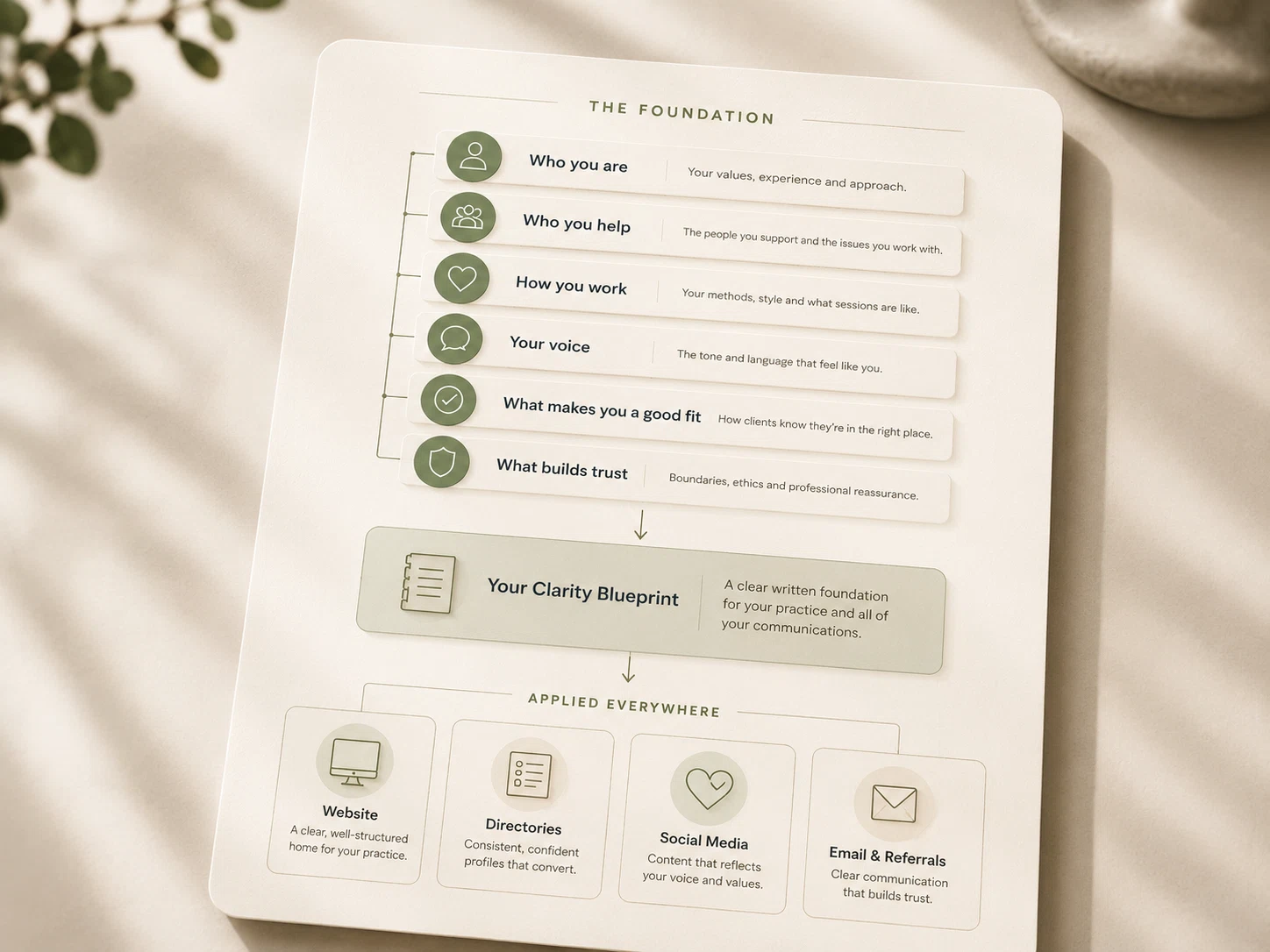
Not simply a document, but a more confident and usable understanding of your practice.
A grounded description of the values, strengths, personality and therapeutic influences shaping your work.
Focus based on genuine fit rather than a narrow niche selected only for marketing purposes.
A clear explanation of what makes your practice meaningfully different from therapists with similar qualifications.
Core messages and tone-of-voice guidance that feel human, professional and recognisable.
A strategic basis for your visual identity, website, directory profile, content and wider professional presence.
Greater confidence introducing your practice to clients, colleagues, supervisors and referral partners.
05
Practice Clarity is the method. The Blueprint is the written strategic foundation produced through that work.
The values, qualities, influences and natural strengths shaping the therapist you are becoming.
The people, concerns and therapeutic relationships that may naturally suit your developing way of working.
How your practice can be understood and distinguished without making inflated or artificial claims.
The central ideas prospective clients need to understand before deciding whether you may be right for them.
Guidance for communicating with consistency across your website, directory profiles and wider practice.
The key messages, emotional journey and information hierarchy needed for a clearer first impression.
The emotional and professional qualities the eventual identity should communicate before design begins.
A recommended page and content structure based on what suitable clients need before making contact.
A considered recommendation for what your practice needs next—and what it does not need yet.
06
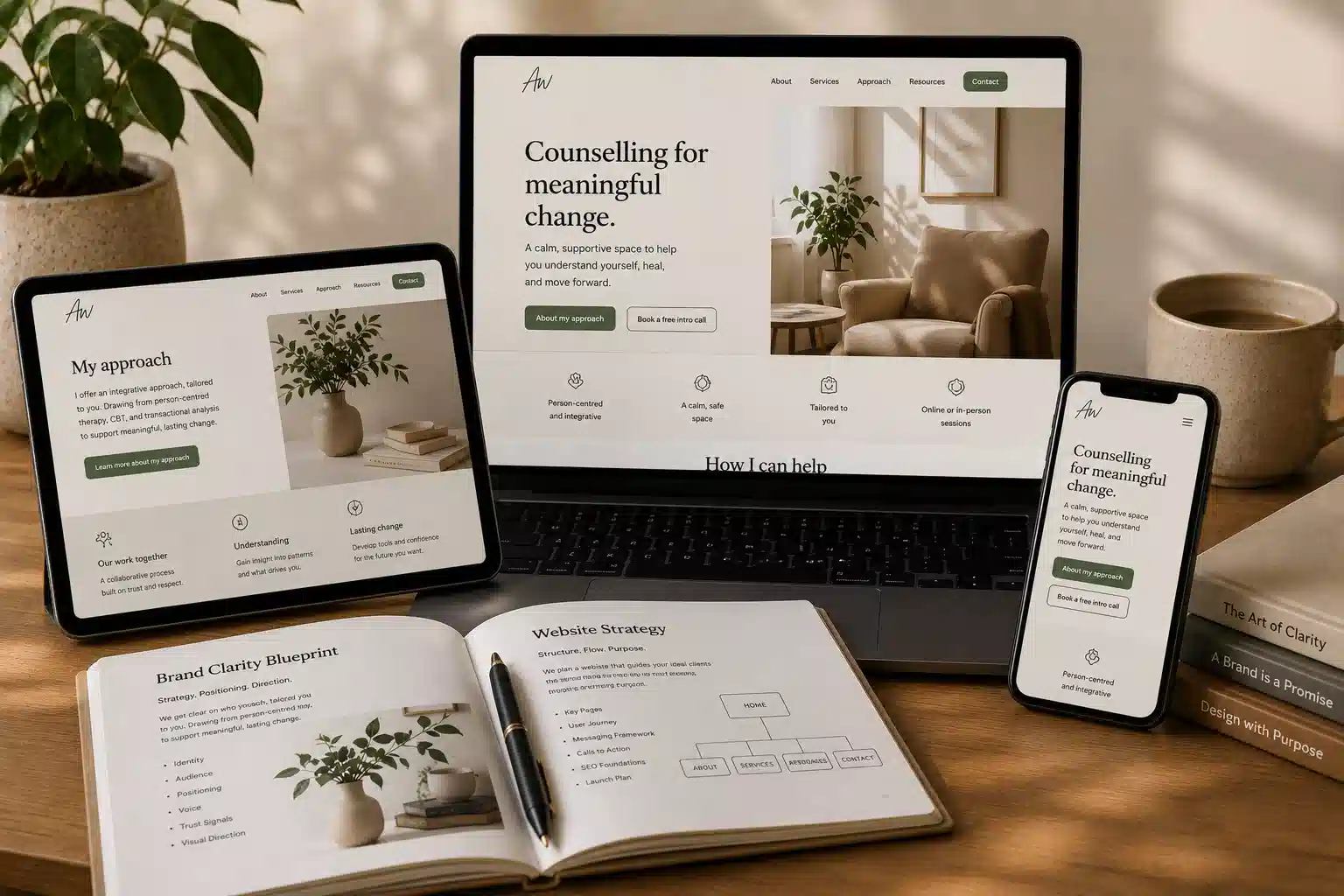
The Blueprint can stand alone. You can use it to refine your existing website, improve your directory profile or make future decisions with greater confidence.
You can also continue into positioning, visual identity and website development.
In that complete process, each stage expresses the same foundation: who you are, how your work should be understood and what suitable clients need to recognise.
FAQ
No. The process helps you notice patterns in the clients, concerns and relationships that naturally suit you. The aim is useful focus, not an artificial label.
That is expected. Professional identity is not treated as something permanently fixed. The aim is to create a truthful foundation for where you are now that can evolve with your practice.
It is related, but the work begins earlier. Before deciding how to present your practice, we clarify what the practice genuinely needs to express.
No. The Blueprint is designed to be useful independently. There is no obligation to purchase further stages.
Professional Identity
We begin with what is already emerging, then give it enough structure to become understandable, communicable and useful.